One and Three Texts
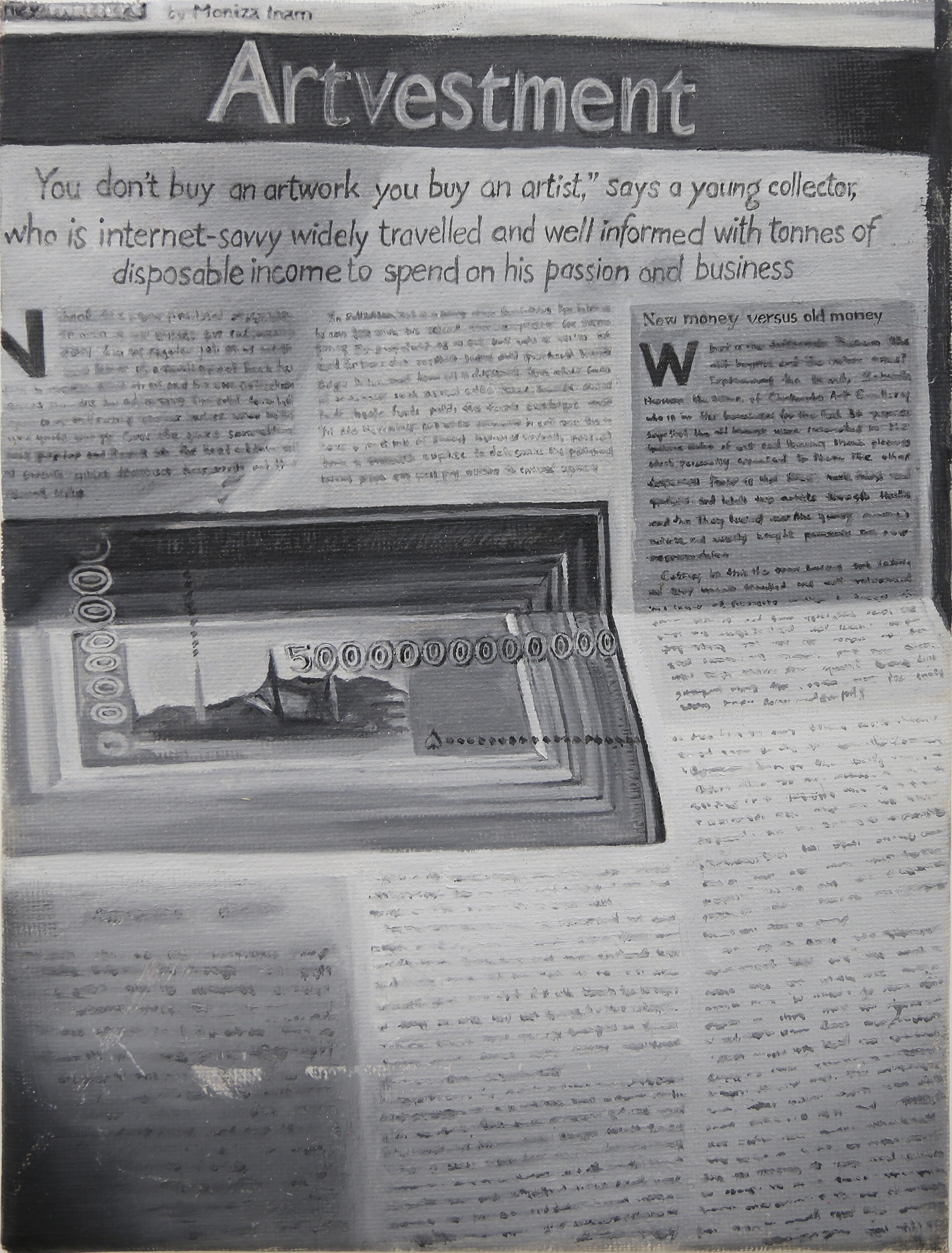
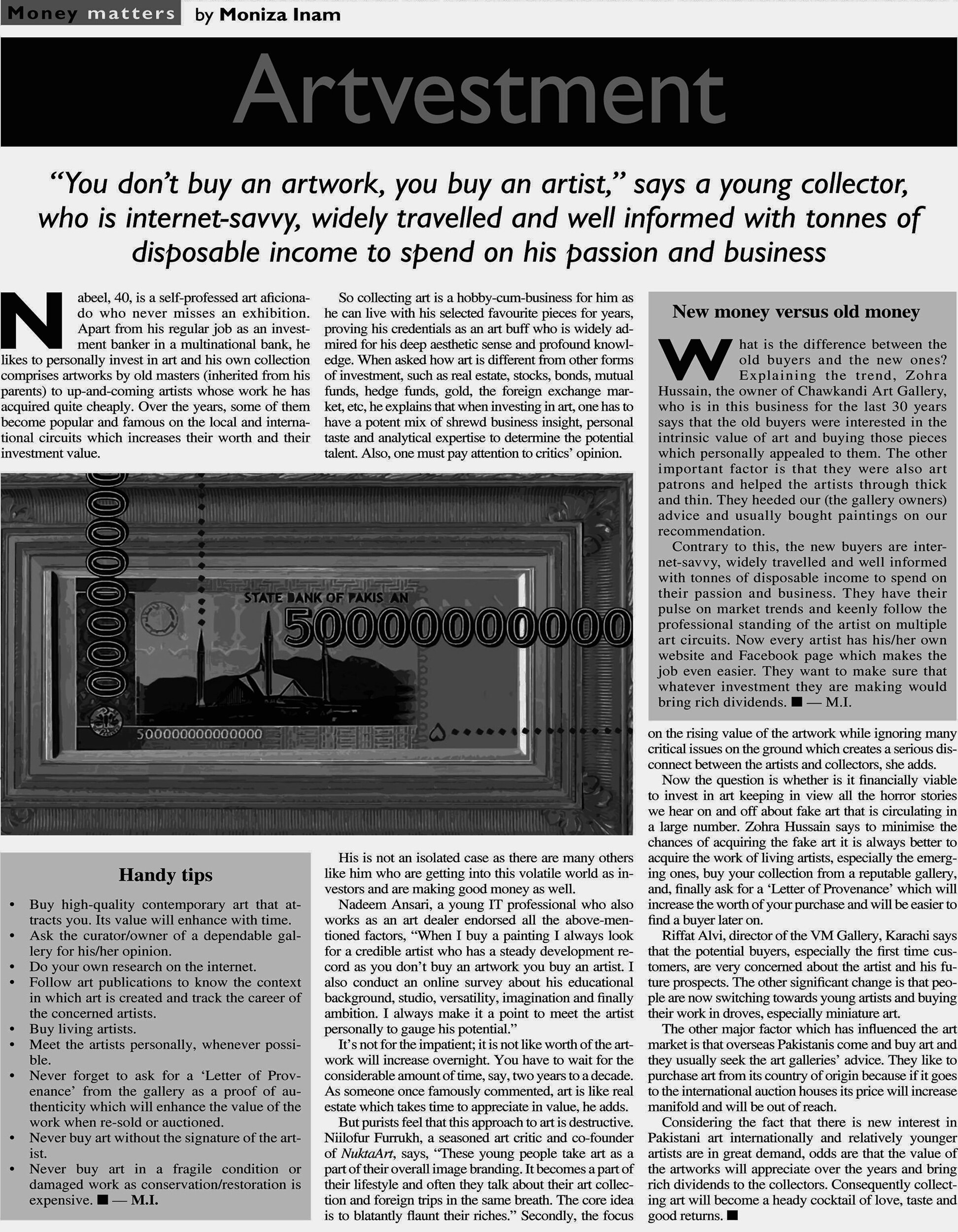
A few years ago, I came across an article in a Pakistani English language daily about investing in art.I was struck by the language it used to discuss something I was personally and professionally immersed in. The tone treated art as an investment opportunity, using financial vocabulary to frame cultural production. I clipped the article and set it aside. When I returned to it later, I was already thinking about questions of translation, ownership, and who gets to define the value of cultural production.
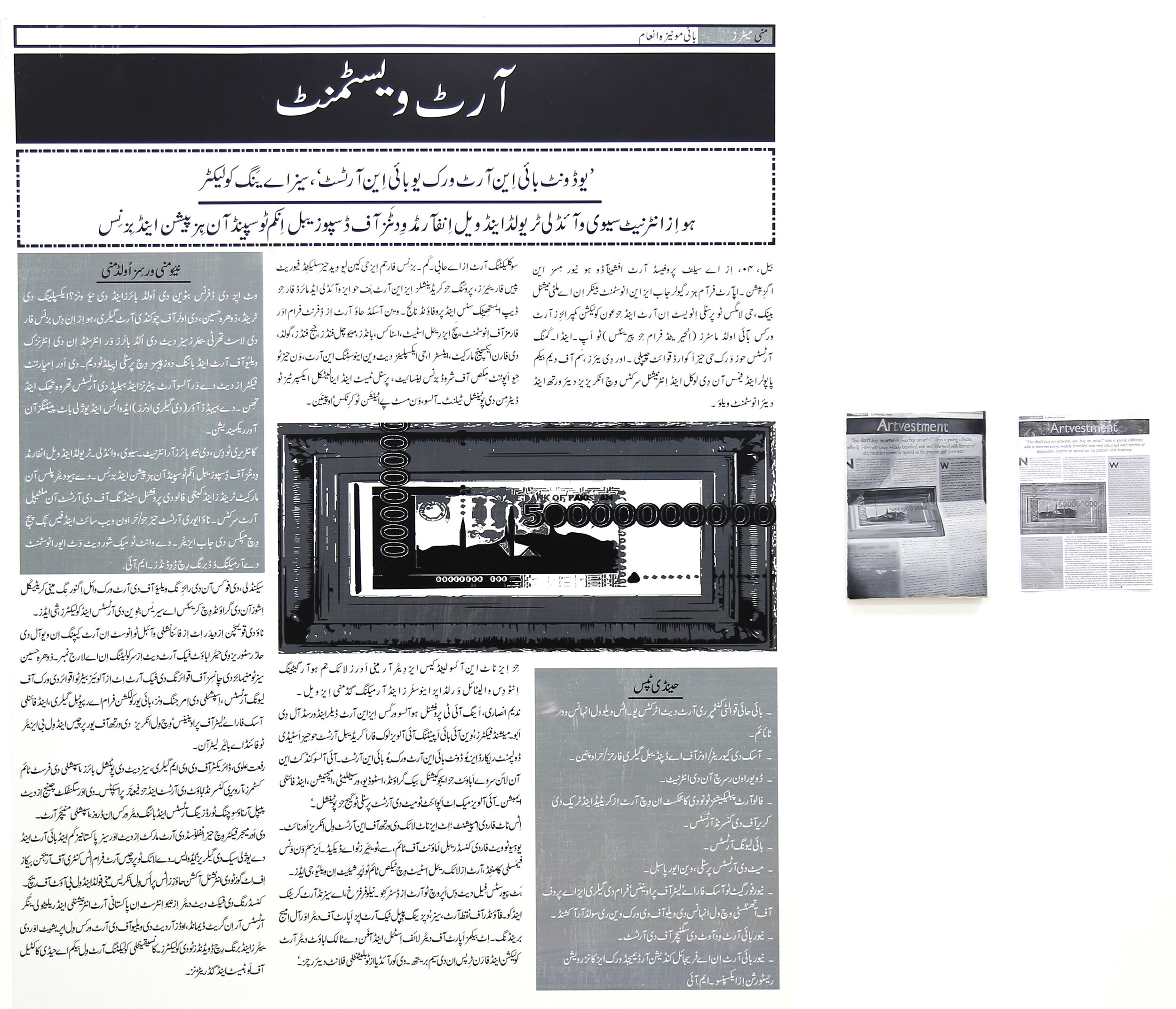
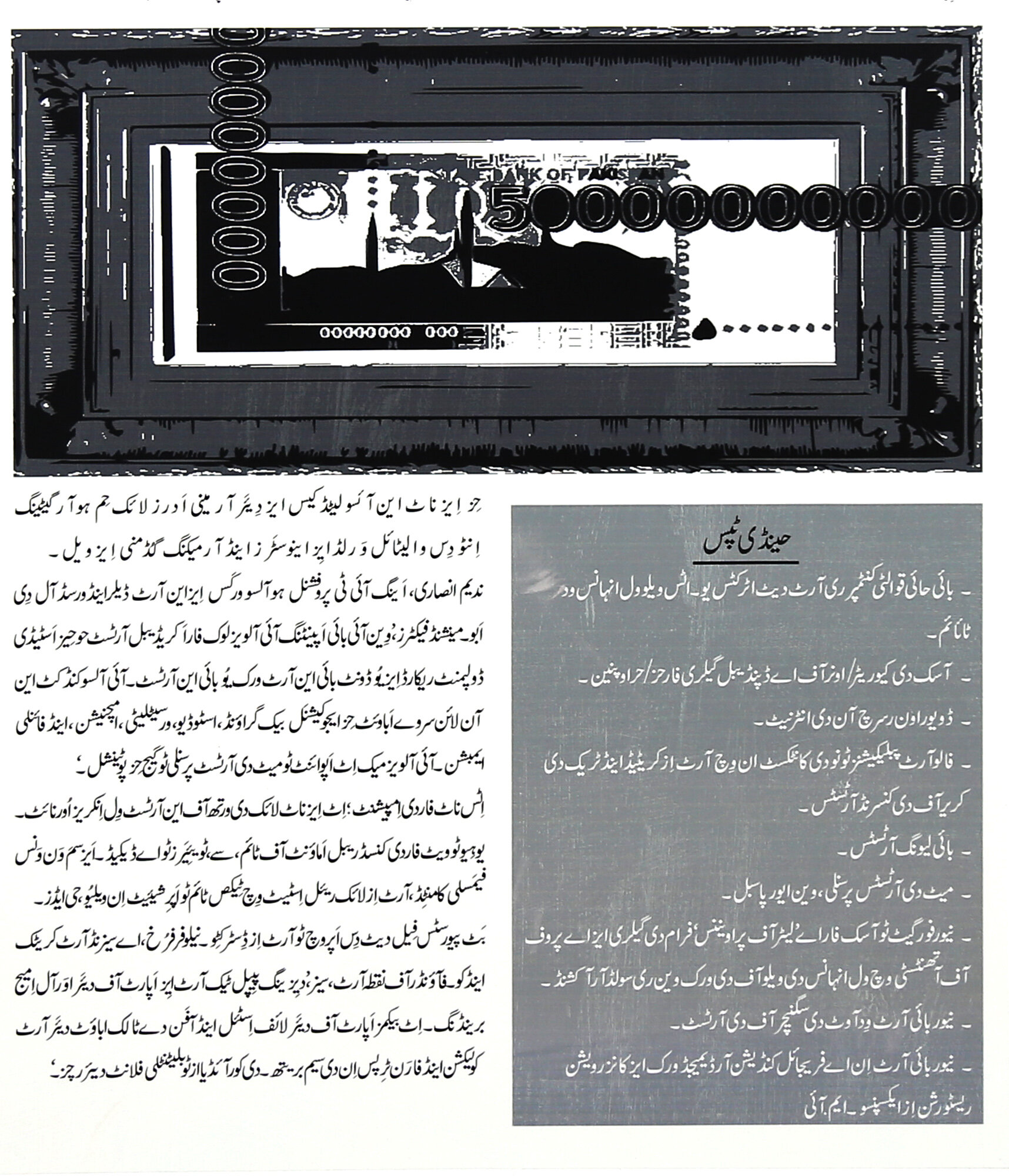
This encounter led me to create a work in the tradition of Joseph Kosuth’s One and Three series. My version presents three interconnected forms: a photocopy of the original newspaper clipping, a painted reproduction of that clipping based on a folded version of it, and finally, a phonetic transliteration of the article into Urdu. In the transliteration, even readers fluent in Urdu script find the text almost illegible. The content dissolves into sound, and because of the conventions of phonetic rendering, the reader is compelled to adopt an exaggerated “local” accent, one that is both hypervisible and strangely detached from meaning. The article becomes not a piece of information but a performance of sound, identity, and misalignment.
The shift from English to Urdu, via phonetic transliteration rather than direct translation, creates a deliberate breakdown. Meaning erodes, suggesting that language is not neutral but tied to power, access, class, and education. The work gestures toward the colonial and postcolonial histories embedded in English language discourse in Pakistan, especially as the exaggerated local accent becomes a performance of something almost, but not entirely, like language.